
June Topics
-
 Article
Do Something!: Adult (A2)—Education for Sustainable Development and Citizenship Programme
This lesson can help your students identify and take positive action in their community.
-
 Article
Global Institutions: Secondary (A2)—Education for Sustainable Development and Citizenship Programme
This lesson can help your students evaluate critical perspectives of global institutions.
-
 Article
Positive Action: Secondary (A1+)—Education for Sustainable Development and Citizenship Programme
This lesson can help your students identify and take positive action in their communities.
-
 Lesson
Career Readiness (A1): Science—The Energy of a Small Town
The reading describes how a small town in Texas uses 100% clean energy.
-
 Lesson
‘Tastes like water’: how a US facility is recycling sewage to drink
Read about a California project that turns sewage into drinking water in less than an hour and could be a blueprint for other water-scarce regions.
-
 Lesson
‘It really is possible to be zero waste’: the restaurant with no bin
Read about a Mexico City restaurant’s efforts to produce ‘zero waste’ and how it works in partnership with local farmers.
-
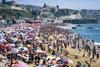 Warmer/Filler
Current Themes: Unsustainable Tourism
Use this handy worksheet to get your students talking about the harmful effects of mass tourism.
-
 Lesson
Elementary Business: Trees for sale!
It’s time to invest in nature. Could the sale of trees save our natural resources?
-
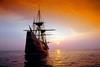 Article
Famous explorers
In this lesson plan, students find out about the lives and amazing achievements of Captain James Cook (world famous explorer), Valentina Tereshkova (first woman in space) and Roald Amundsen (first explorer to reach the South Pole).
-
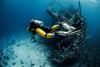 Lesson
CLIL: History—Sylvia Alice Earle
Introduce your students to Silvia Alice Earle, famous for her underwater travels.
-
 Article
Environment: Natural disasters
In this lesson plan, students unjumble words to reveal four natural disasters before listening to information on hurricanes and floods. Comprehension questions focus on the what, why, where and when. A follow-up activity asks students to match vocabulary such as ’drown’, ’evaporate’, disrupt’ and ’blow down’ to their definitions.
-
 Article
Introducing ecosystems
A comprehensive set of resources about ecosystems, introducing habitats and environments, as well as examining the food chains and food webs within an ecosystem. Each reading text is followed by a variety of vocabulary and speaking activities that build students’ knowledge of the subject and confidence with ecosystems terminology. Extra ...
-
 Article
The Earth: Air and water
A lesson plan to teach pupils about the Earth’s atmosphere and hydrosphere.